Cat Journal KDP Interiors: Navigating Specifications for a Professional Finish
Creating a successful low-content book on Amazon requires more than just an adorable cover featuring a tabby or a calico. The interior experience is what ultimately determines whether a customer leaves a five-star review or returns the product in frustration. When designing or selecting Cat Journal KDP interiors, specifically for the popular 6x9 inch trim size with 100 pages, precision is paramount. Many creators assume that any generic lined template will suffice, but the difference between a hobbyist project and a professional publication lies in the technical execution of margins, resolution, and structural layout.
The appeal of a feline-themed journal is undeniable. Cat owners are a passionate demographic who often seek functional ways to track pet health, document memories, or simply enjoy themed stationery. However, the market is saturated with low-quality uploads that fail to meet basic printing standards. Understanding the specific constraints of a 300 DPI, no-bleed interior ensures your book looks crisp in print and provides a seamless writing experience. This guide addresses the common pitfalls that undermine quality and offers practical corrections to elevate your next publishing project.
The Critical Importance of Resolution and Bleed Settings
One of the most frequent errors encountered in self-published journals is a misunderstanding of print resolution. For a Cat Journal KDP interior to look professional, it must be designed at 300 DPI (dots per inch). Uploading files at 72 DPI or 150 DPI might look acceptable on a computer monitor, but they result in pixelated lines and blurry graphics once printed. This is particularly damaging for cat-themed designs where subtle paw prints, whiskers, or intricate borders are central to the aesthetic. A fuzzy line suggests poor quality control and diminishes the perceived value of the book.
Equally important is adhering to "no bleed" specifications correctly. A 6x9 inch journal without bleed means all content must stay within the safe zone. A common mistake is placing decorative elements too close to the trim edge or the gutter. If you are using a pre-made interior or designing your own, verify that the margins account for the binding. For a 100-page book, the gutter margin should typically be at least 0.375 inches to prevent text or images from disappearing into the spine. Ignoring this results in a cramped writing area and a frustrating user experience where the customer has to break the spine just to write near the center of the page.
Verifying File Dimensions Before Upload
Before finalizing your PDF, always double-check the canvas size. For a 6x9 no-bleed interior, your document should be exactly 6 inches by 9 inches. Some templates incorrectly include extra space for bleed even when none is required, leading to rejection or scaling issues during the upload process. Use professional design software or verified templates that explicitly state "6x9 No Bleed" rather than guessing the dimensions. This small verification step saves hours of reformatting and prevents the disappointment of receiving a proof copy with misaligned content.
Structural Layout: Belongs To Page and Blank Endings
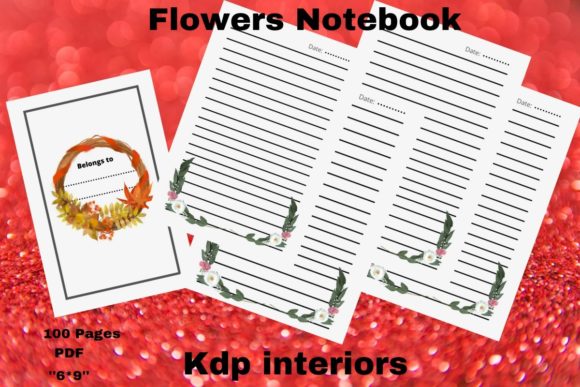
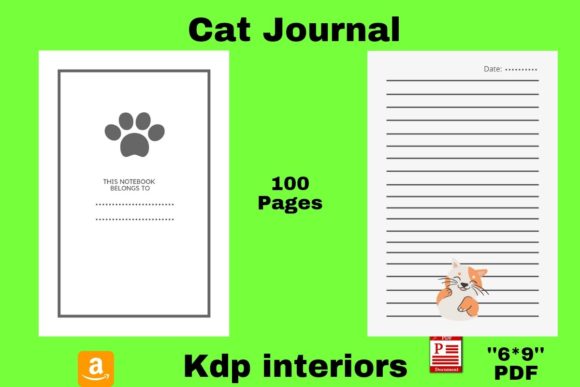
Beyond technical specs, the structural flow of the journal dictates its usability. A professional Cat Journal KDP interior includes specific navigational elements that generic notebooks lack. The inclusion of a dedicated "Belongs To" page is standard best practice, yet many creators place it arbitrarily. Ideally, this page should appear immediately after the title page or as the very first usable sheet. It serves as both a personalization feature and a practical lost-and-found tool. Ensure there is adequate white space around the name field so users can write comfortably without hitting pre-printed lines or graphics.
Another overlooked detail is the pagination strategy regarding blank pages. Standard industry practice for a 100-page journal involves ending with one blank page. This is not wasted space; it is a necessary buffer. Printing presses require lead-in and lead-out areas, and having content on the absolute last page increases the risk of smudging or trimming errors. Furthermore, a final blank page provides a clean visual stop for the user. When evaluating interiors, check the page count carefully. If a template claims 100 pages but fills every single one with content, it may cause production issues or feel unfinished. Adhering to the convention of 98 usable interiors plus front matter and a final blank page demonstrates attention to manufacturing realities.
Evaluating Usability Over Novelty
While cute cat illustrations attract buyers, functionality retains them. A significant mistake in niche journal creation is prioritizing decoration over utility. Dark backgrounds, heavy patterns, or overly thick lines can make writing difficult. Ink may bleed through or become illegible against busy artwork. When choosing or designing Cat Journal KDP interiors, test the contrast. Lines should be visible enough to guide handwriting but light enough to disappear beneath ink or pencil. Grey tones (around 30-40% opacity) often work better than stark black for ruled lines in low-content books.
Consider the specific needs of the cat owner audience. Are the prompts relevant? Is there space for tracking vet visits, feeding schedules, or behavioral notes? A generic lined notebook labeled as a "cat journal" often fails because it lacks tailored utility. Even if you are using a simple lined interior, adding subtle thematic headers or footer icons can bridge the gap between generic and specialized without compromising writability. Always view your interior through the lens of the end-user: can they actually use this daily, or is it merely decorative?
Sourcing and Licensing Integrity
For entrepreneurs and freelancers, licensing is a non-negotiable aspect of using pre-made interiors. A common pitfall is assuming that purchasing a template grants unlimited commercial rights. Always read the license agreement specifically for KDP usage. Some licenses restrict the number of copies sold or prohibit use in certain categories. Additionally, ensure that any cat imagery used is original or properly licensed for commercial print use. Using unverified assets from free stock sites can lead to copyright strikes or account suspension. Investing in legitimate, high-quality interiors protects your business and ensures you are delivering a unique product rather than a duplicate found on dozens of other listings.
Final Quality Checks Before Publishing
Before hitting publish, conduct a thorough pre-flight check of your Cat Journal KDP interior. Download the digital proof from Amazon and zoom in to 100% to inspect line clarity and margin safety. Verify that the "Belongs To" page is legible and well-positioned. Confirm that the total page count matches your metadata exactly—100 pages means 100 pages, not 99 or 101. Check that the final page is indeed blank to serve as the proper buffer.
Finally, consider ordering a physical proof copy. Screen calibration varies, and only a physical book reveals true paper opacity, binding tightness, and color accuracy. This step is invaluable for identifying issues like ghosting or gutter creep that digital previews cannot show. By treating the interior with the same level of care as the cover, you create a product that satisfies customers and builds a sustainable publishing portfolio. Success in low-content publishing comes from respecting the details that transform a simple stack of paper into a cherished tool for cat lovers everywhere.