Walking Log Book Journal KDP Interiors: A Complete Guide for Publishers
The low-content publishing market on Amazon has evolved significantly over the last few years. While generic lined notebooks face saturation, niche-specific functional journals continue to perform well because they solve a tangible problem for the user. Among these, health and fitness trackers remain evergreen categories. For self-publishers looking to enter or expand within this space, utilizing professional Walking Log Book Journal KDP Interiors provides a strategic advantage. These pre-designed templates bridge the gap between creative concept and technical execution, allowing publishers to focus on marketing and keyword research rather than graphic design.
Understanding the specific utility of these interiors is essential for creating a product that customers actually want to buy and use. A walking log is not merely a diary; it is a data tracking tool used by individuals managing weight loss, recovering from surgery, training for events, or simply maintaining an active lifestyle in retirement. When you download a high-quality interior package, you are acquiring a structured system that has been optimized for both the end-user’s experience and Amazon’s printing standards.
Technical Specifications and Print Readiness
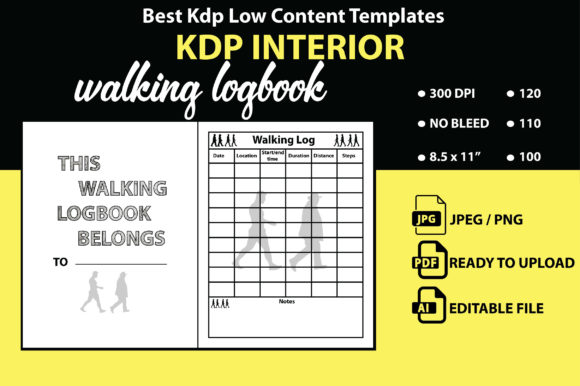
One of the most common hurdles for new KDP publishers is formatting. Margins, bleed settings, and resolution requirements can be confusing, leading to rejected manuscripts or poor print quality. High-quality Walking Log Book Journal KDP Interiors eliminate this guesswork by adhering to strict industry specifications.
Dimensions and Page Counts
The standard specification for these interiors is 8.5″ x 11″ inches. This large format is deliberate. Unlike a pocket-sized notebook, a walking journal often requires ample space for recording multiple data points such as distance, time, pace, weather conditions, heart rate, and personal notes. The larger canvas ensures the writing area remains uncluttered and accessible for users of all ages, including seniors who may have dexterity or vision challenges.
Versatility in page count is another critical feature. Professional interior packs typically offer options for 100, 110, and 120 pages. This flexibility allows publishers to test different price points and spine widths. A 100-page book might serve as a quarterly tracker, while a 120-page version could cover four months of daily activity. Having these variations ready enables rapid A/B testing of listings without additional design work.
File Formats and Bleed Settings
Reliable interior packages include files in multiple formats to suit different workflows:
- Print-Ready PDF: The primary file for upload. These are tested specifically on KDP to ensure margins and safe zones are correct.
- JPEG and PNG: Useful for creating mockups, A+ content, or promotional social media graphics.
- Editable AI File: Adobe Illustrator source files allow advanced users to modify fonts, add branding, or adjust layout elements to create a unique derivative work.
Crucially, these interiors address the "Bleed vs. No Bleed" distinction. Most walking logs utilize a No Bleed setting, keeping all content safely within the margin boundaries. This prevents text or tracking lines from being trimmed off during the physical printing process, ensuring a professional finish every time.
Functional Design: What Makes a Walking Log Usable?
When evaluating Walking Log Book Journal KDP Interiors, one must look beyond aesthetics to functionality. A pretty cover sells the book, but a functional interior generates positive reviews and repeat customers. Effective walking journals share several key characteristics that should be present in any premium template.
Comprehensive Tracking Fields
Generic notebooks fail as walking logs because they lack structure. Specialized interiors provide dedicated fields that prompt the user to track relevant metrics. Essential columns typically include:
- Date and Time: For identifying patterns in energy levels or consistency.
- Distance and Duration: The core metrics for progress tracking.
- Pace/Speed: Calculated or recorded via GPS watch.
- Calories Burned: Often a primary motivator for weight management users.
- Mood and Energy Level: Connecting physical activity to mental health.
- Weather/Terrain: Contextual data that explains performance variations.
Ergonomic Layout Considerations
The best interiors are designed with the physical act of writing in mind. Binding margins (gutter) must be sufficient so that the user does not have to break the spine to write near the center. Row heights should accommodate various handwriting sizes. Furthermore, visual hierarchy matters; headers should be distinct from data entry lines to reduce cognitive load when logging information after a tiring walk.
Target Audiences and Real-World Applications
Understanding who uses these journals helps publishers select the right interior style and craft better listing copy. Walking Log Book Journal KDP Interiors serve diverse demographics, each with unique needs.
Health Management and Rehabilitation
Many users are prescribed walking by healthcare providers following cardiac events, joint replacement surgery, or diabetes diagnosis. For this group, the journal serves as a medical compliance tool. They need clear, simple layouts where they can record doctor-requested metrics like resting heart rate or perceived exertion. Interiors with minimalist designs and larger font sizes appeal strongly to this demographic.
Fitness Enthusiasts and Challenge Participants
Users participating in virtual walking challenges (e.g., "Walk Across America") or training for 5K/10K events require more detailed tracking. They benefit from interiors that include weekly summary pages, goal-setting sections, or graph paper for visualizing progress. Editable AI files are particularly valuable here, as publishers can customize the interior to align with specific challenge themes or seasonal events.
Mental Health and Mindful Walking Practitioners
The "mindful walking" trend combines physical movement with meditation and nature connection. Journals for this audience often integrate gratitude prompts, nature observation notes, or reflection spaces alongside standard mileage tracking. Publishers can differentiate their products by selecting interiors that balance quantitative data with qualitative reflection areas.
Evaluating Quality Before You Publish
Not all KDP interiors are created equal. Before downloading and uploading Walking Log Book Journal KDP Interiors, conduct a thorough quality assessment to protect your publishing account and brand reputation.
Verification Checklist
- KDP Testing Confirmation: Ensure the provider explicitly states files have been tested on KDP. Untested files risk rejection or printing errors.
- Resolution Check: Verify that PDFs are at least 300 DPI. Low-resolution lines appear pixelated in print, leading to negative reviews.
- Margin Safety: Open the PDF and measure the gutter margin. For a 120-page 8.5x11 book, a minimum 0.375" inside margin is recommended, though 0.5" provides better usability.
- Licensing Terms: Confirm commercial use rights. Some licenses prohibit using the interior "as-is" and require modification. Others allow unlimited publications. Understanding these terms prevents copyright violations.
Customization Strategy
While ready-to-upload files offer convenience, adding unique value improves long-term success. Use the editable AI files to:
- Add a branded introduction page explaining how to use the journal effectively.
- Include motivational quotes or walking tips relevant to your specific niche.
- Create custom cover designs that perfectly match the interior aesthetic.
- Add bonus pages like stretching guides, shoe selection checklists, or hydration trackers.
Practical Expectations and Limitations
It is important to maintain realistic expectations when using pre-made interiors. Walking Log Book Journal KDP Interiors are tools, not guarantees of sales. Success depends on market research, keyword optimization, and cover design as much as interior quality.
Publishers should also recognize limitations. Pre-made interiors cannot be trademarked, meaning competitors may use identical layouts. Differentiation must come from branding, marketing angles, bundling strategies, or customization. Additionally, digital interiors cannot replicate the tactile experience of premium paper; publishers should order proof copies to verify that the paper weight and finish meet customer expectations for a workbook that will be carried outdoors and handled frequently.
Making the Right Choice for Your Publishing Business
Incorporating professionally designed walking log interiors into your KDP catalog offers significant efficiency benefits. The combination of tested print-ready PDFs, multiple page count options, and editable source files provides a solid foundation for building a health and fitness journal brand. By focusing on user experience, understanding target audience needs, and conducting proper quality verification, publishers can transform these digital assets into valuable physical products that genuinely help people achieve their wellness goals.
Whether you are a seasoned publisher scaling your operation or a newcomer seeking a reliable entry point into low-content publishing, Walking Log Book Journal KDP Interiors represent a practical intersection of design quality and business efficiency. The key lies in treating these interiors not as finished products, but as professional-grade components in a broader publishing strategy centered on serving real human needs.