Fishing Log Book KDP Interiors: Building a Unique Low-Content Asset
Creating a successful low-content book on Amazon requires more than just uploading a generic template. When developing Fishing Log Book KDP Interiors, the goal is to solve specific problems for anglers while adhering to strict publishing standards. A well-designed interior serves as the functional backbone of the product, but it is the combination of precise technical specifications and a unique front cover that ultimately prevents duplicate content flags and drives sales. For creators targeting the 8.5 x 11 inch no-bleed format with 120 pages, understanding the intersection of user utility and platform compliance is essential for building a sustainable portfolio.
Technical Precision in No-Bleed Layouts
The specification of an 8.5 x 11 inch trim size with no bleed dictates the entire design architecture. Unlike full-bleed books where graphics extend to the paper's edge, a no-bleed fishing log requires a safety margin that respects the binding and trimming process. Practical application means maintaining at least a 0.5-inch gutter margin on the inside edge to ensure that writing spaces near the spine remain accessible. If the interior lines or tables creep too close to the binding, the book becomes frustrating to use, leading to negative reviews regardless of how good the content concept is.
For a 120-page count, consistency is key. This page count offers enough volume to feel substantial without becoming unwieldy for a tackle box or backpack. When designing these interiors, creators must account for the fact that standard home printers and professional KDP printing have slight variances. Keeping all critical elements, including header text, date fields, and sketch areas, within a defined safe zone ensures that every copy looks professional. This technical discipline separates high-quality KDP interiors from amateur submissions that often get rejected during the automated review process.
Functional Design for Real-World Anglers
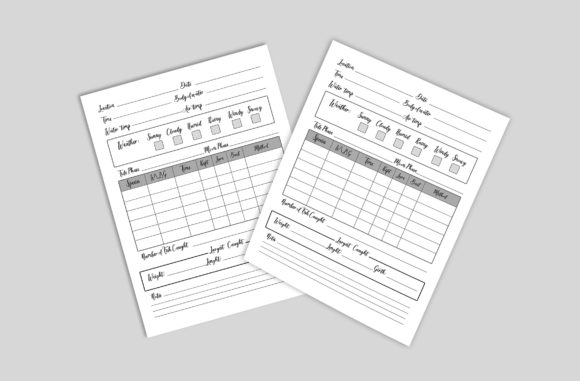
Anglers do not use log books in sterile environments. They are often on boats, riverbanks, or docks, dealing with wind, water, and movement. Effective Fishing Log Book KDP Interiors prioritize usability over aesthetic complexity. A realistic layout includes ample white space for quick notes rather than dense paragraphs of prompts. Fields for weather conditions, water temperature, bait type, and catch weight should be large enough to write in while balancing a notebook on a knee or a cooler lid.
Consider the scenario of a weekend angler trying to record data quickly before releasing a fish. If the interior requires tiny checkboxes or microscopic font sizes, the user will abandon the log. Successful interiors use clean, bold lines and intuitive iconography. Including sections for GPS coordinates or depth finder readings caters to modern fishermen who blend traditional logging with technology. By anticipating the physical context of use, creators transform a simple PDF file into a valuable field tool.
Diverse Use Cases Beyond Personal Hobby
While individual recreational fishing is the primary market, versatile log book interiors serve multiple distinct audiences. Understanding these niches allows for better keyword targeting and product differentiation.
- Charter Captains and Guides: Professional guides need to maintain records for liability, client satisfaction, and regulatory compliance. An optimized interior for this group might include dedicated sections for client waivers, trip duration billing, and detailed catch-and-release statistics to demonstrate sustainability practices.
- Fishing Clubs and Tournaments: Local bass clubs or youth organizations often require standardized logging for scoring and verification. Creating interiors tailored for tournament directors involves adding fields for judge signatures, witness verification, and official weigh-in times.
- Educational and Youth Programs: Summer camps and nature schools use fishing logs as teaching tools for biology and ecology. Interiors for this demographic benefit from educational prompts about species identification, habitat conservation, and knot-tying diagrams alongside standard logging fields.
- Scientific Citizen Science: Researchers often rely on public data collection. A log book designed with scientific rigor, including specific taxonomic categories and environmental observation metrics, can appeal to eco-conscious anglers contributing to conservation databases.
The Critical Role of Custom Front Covers
Amazon’s algorithm actively penalizes duplicate content, and low-content books are particularly vulnerable. Even if your interior is unique, using a stock photo or a commonly used Canva template for the cover can trigger suppression. The requirement to create your own front cover is not merely a suggestion; it is a business necessity. A custom cover signals to both the algorithm and the customer that this is a distinct product.
Practical execution involves original illustration, proprietary typography, or licensed artwork that has been significantly modified. For a fishing log, this might mean creating a custom vector graphic of a specific local fish species rather than using a generic silhouette. It could involve hand-lettering the title or compositing multiple elements to create a new visual identity. When the cover art is genuinely original, it protects the listing from being merged with competitors and establishes brand recognition. This uniqueness also justifies a higher price point, as customers perceive the book as a premium, thoughtfully designed resource rather than a mass-produced commodity.
Strategic Considerations Before Publishing
Before finalizing a PDF for upload, creators must evaluate the market saturation and specific value proposition of their interior. Simply searching "fishing log book" reveals thousands of results. To succeed, one must identify gaps. Perhaps there is an abundance of general freshwater logs but a shortage of saltwater surf casting journals. Maybe existing fly fishing logs lack adequate space for recording insect hatch patterns. Conducting this granular research ensures that the 120 pages are filled with relevant, high-demand content.
File preparation is equally critical. The final deliverable must be a flattened, high-resolution PDF. Text layers should be embedded to prevent font substitution errors during printing. Creators should always order a proof copy before launching. Seeing the physical 8.5 x 11 inch no-bleed format in hand reveals issues that screens cannot, such as paper opacity or margin adequacy. A line that looks perfect on a monitor might be too faint when printed on standard 55# cream paper. Validating the physical product prevents costly reprints and preserves seller reputation.
Optimizing for Kindle Direct Publishing Success
Optimization extends beyond the file itself to how the product is presented. When describing Fishing Log Book KDP Interiors in metadata, focus on the benefits derived from the specific layout features. Instead of listing "120 pages," explain that the book provides enough capacity for two full seasons of weekend trips. Instead of saying "no bleed," describe how the generous margins allow for comfortable note-taking without fighting the spine binding.
Successful publishers treat these interiors as part of a broader ecosystem. They cross-reference their cover designs with seasonal trends, updating listings to match spring spawning runs or summer deep-sea excursions. They gather feedback from early users to refine future editions, perhaps adding a moon phase calendar or a gear maintenance checklist based on actual requests. This iterative approach turns a static PDF into a dynamic product line.
Ultimately, the value of a fishing log book lies in its ability to enhance the angling experience through organization and reflection. Whether used by a grandfather teaching a grandchild, a guide managing a business, or a solo enthusiast tracking personal bests, the interior must facilitate that connection. By combining technical accuracy, genuine utility, and authentic visual branding, creators can build assets that stand the test of both Amazon’s algorithms and the rigors of life on the water. The most effective KDP interiors are those that disappear into the background, allowing the user to focus entirely on the catch, the memory, and the next entry in their log.