Restaurant Review Journal KDP Interiors: A Practical Resource for Food Critics and Publishers
Creating a low-content book for Amazon KDP often comes down to finding the right balance between niche specificity and broad appeal. The Restaurant Review Journal KDP Interior is designed to bridge that gap for creators targeting food enthusiasts, aspiring critics, and culinary travelers. Rather than spending dozens of hours designing rating grids, flavor profile wheels, and note sections from scratch, this resource provides a pre-formatted foundation. It is essentially a production-ready template that allows publishers to launch a high-quality journal without the typical design bottleneck.
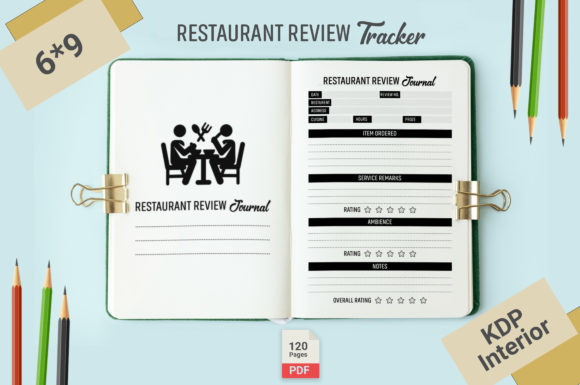
This interior package is more than just blank lines; it is a structured system for capturing dining experiences. For KDP creators, the value lies in the included 100 editable source files in Illustrator AI format alongside the print-ready PDF. This dual-format approach means you can publish immediately using the PDF or customize the branding, fonts, and layout elements in Adobe Illustrator to create a unique product line. With a standard 6x9 trim size and 100 pages optimized for no-bleed printing, it fits seamlessly into current KDP specifications, reducing the risk of formatting errors during the upload process.
Real-World Applications for Food-Focused Journals
The utility of a specialized restaurant review journal extends far beyond simple star ratings. When utilizing these interiors, it helps to visualize the specific end-user scenarios where this product solves a genuine problem. Understanding these use cases allows for better keyword targeting and marketing copy when listing the book on Amazon.
The Aspiring Food Blogger and Influencer
Digital content creators often struggle with consistency. An influencer visiting three new restaurants a week needs a standardized way to record details before they are posted to Instagram or TikTok. This journal interior serves as an analog database. The structured prompts ensure they never forget to note the ambiance, service speed, or specific dish ingredients. For KDP sellers, positioning this journal as a "Content Creator’s Dining Companion" opens up a demographic that values organization as much as culinary appreciation.
Culinary Students and Hospitality Professionals
For students in hospitality management or culinary arts, dining out is rarely just for pleasure; it is field research. These professionals need to analyze menu engineering, plating techniques, and front-of-house operations. The editable AI files are particularly valuable here. A publisher could modify the standard review pages to include specific sections for "Service Flow Analysis" or "Cost-to-Value Assessment," creating a highly specialized textbook alternative or practicum journal. This transforms a generic review book into an educational tool.
The Dedicated Home Chef and Recipe Developer
Home cooks who dine out frequently do so to gather inspiration for their own kitchens. They aren't necessarily reviewing the restaurant for the public; they are deconstructing the meal for personal growth. A journal tailored to this audience might focus less on service ratings and more on flavor combinations and texture notes. Because the source files are fully editable, creators can adapt the Restaurant Review Journal KDP Interiors to emphasize "Tasting Notes" over "Customer Service," catering specifically to the recipe development niche.
Travel Writers and Guidebook Contributors
Writers working on regional dining guides need to compare establishments objectively across weeks or months of travel. Memory is fallible, but a consistent journal format creates comparable data points. A 100-page journal allows for extensive documentation of a specific city or region. Publishers can create location-specific variations, such as "The Austin BBQ Review Journal" or "NYC Fine Dining Log," by simply updating the cover and title page while retaining the robust interior structure.
Leveraging the Editable Source Files
The inclusion of 100 editable Illustrator AI files is arguably the most significant feature of this package. While the print-ready PDF offers speed, the AI files offer longevity and brand differentiation. In a saturated KDP market, identical interiors can lead to price wars. Customization is the antidote.
- Branding Consistency: If you have an existing series of journals with a specific font hierarchy or logo placement, the AI files allow you to match the restaurant journal to your established aesthetic perfectly.
- Niche Adaptation: You can easily swap out generic icons for niche-specific graphics. Changing a fork icon to a coffee cup transforms the book into a Cafe Review Journal without redesigning the entire page layout.
- Language Localization: The vector-based text boxes make translation straightforward. Creators can produce Spanish, French, or German versions of the same journal to capture international markets or bilingual demographics.
- Bundling Opportunities: Use the source files to create complementary products, such as a pocket-sized 4x6 version or a premium 8.5x11 workbook edition, maximizing the ROI on a single design asset.
Technical Considerations for KDP Success
Before uploading any low-content book, understanding the technical parameters is essential to avoid rejection or poor print quality. This interior is configured for a 6x9 trim size with no bleed. This is the industry standard for trade paperbacks and ensures compatibility with both black & white and color printing options, though black & white is typically more cost-effective for text-heavy journals.
The 100-page count is a strategic sweet spot. It provides enough volume to feel substantial and justify a higher price point than a 50-page notebook, yet it remains lightweight enough to keep shipping costs and printing fees manageable. When setting up your KDP listing, ensure your cover file accounts for the exact spine width calculated for 100 pages at your chosen paper type (white or cream). Using the provided print-ready PDF eliminates guesswork regarding margins and safe zones, which is critical for preventing text from being trimmed off during the binding process.
Evaluating Fit and Limitations
While the Restaurant Review Journal KDP Interiors is a versatile tool, it is not a universal solution. Honest assessment of its limitations helps prevent mismatched customer expectations.
Design Skill Requirement: To truly benefit from the AI files, users need access to and basic proficiency with Adobe Illustrator. Those without this software will be limited to the static PDF. While the PDF is high-quality, it prevents the customization necessary to stand out in competitive sub-niches.
Market Saturation Awareness: Generic "restaurant review" keywords are highly competitive. Success with this interior usually requires drilling down into micro-niches. A general journal may struggle, but a "Gluten-Free Dining Safety Journal" or "Date Night Spot Tracker" utilizes the same interior structure while targeting underserved search intent.
Interior Complexity vs. User Preference: Some users prefer minimalist dot-grid notebooks over structured templates. This interior assumes the buyer wants guidance and prompts. It is important to clearly display interior sample pages in your Amazon listing so customers know exactly what level of structure they are purchasing. Transparency reduces returns and negative reviews from buyers who expected blank pages.
Strategic Positioning for Long-Term Sales
Treating this interior as a base component rather than a final product is key to sustainable KDP income. The food and beverage niche is evergreen, but trends shift. One season, sourdough baking journals dominate; the next, it might be craft cocktail logging or farm-to-table tracking. Having a professional, editable template ready allows publishers to pivot quickly.
Consider the seasonal nature of dining. Q4 brings holiday parties and gift-giving, making review journals excellent stocking stuffers for foodies. Summer aligns with travel and outdoor dining. By maintaining the core Restaurant Review Journal KDP Interiors but rotating covers and titles to match seasonal intent, creators can maintain relevance year-round. The 100-page format also lends itself well to annual editions, encouraging repeat purchases from loyal customers who fill one journal per year.
Ultimately, this resource streamlines the most time-consuming aspect of low-content publishing: interior design. By handling the structural heavy lifting, it frees up creative energy for market research, keyword optimization, and cover design—the factors that actually drive visibility and sales on Amazon. Whether used as-is for a quick launch or heavily modified for a premium brand, it provides a professional-grade foundation for anyone serious about the culinary journal niche.