Nutrition Tracker KDP Interiors: Design & Publishing Guide
Creating a successful low-content book on Amazon requires more than just uploading a generic template; it demands a product that solves a specific problem for a dedicated audience. Nutrition Tracker KDP Interiors provide the structural foundation for building a health-focused publishing brand. Unlike blank journals, these interiors offer immediate utility to the end user, transforming a simple notebook into an essential daily tool for wellness, fitness, and dietary management. For publishers and designers, this specific asset package bridges the gap between technical specification and creative opportunity, allowing you to launch professional-grade products without spending weeks on layout design.
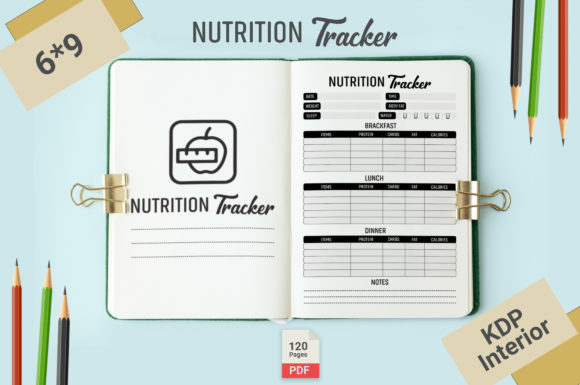
The core value of this resource lies in its production-ready nature. With 120 pages of high-resolution content formatted specifically for the 6×9 trim size, the technical heavy lifting is already complete. The inclusion of both print-ready PDFs and editable Adobe Illustrator (AI) source files creates a dual advantage: you can publish immediately to test market demand, or customize the interior to create a unique proprietary product. This flexibility is crucial for entrepreneurs who need to move quickly while maintaining the option to differentiate their catalog as they scale.
Understanding the Technical Specifications
Before diving into creative adaptations, it is vital to understand why these specifications matter for KDP success. The 6×9 trim size is the industry standard for trade paperbacks and journals. It offers enough surface area for detailed tracking tables while remaining portable enough to fit in a gym bag or kitchen drawer. The 120-page count is strategically chosen to represent approximately three to four months of daily tracking, which aligns with typical habit-formation cycles and quarterly health goals.
The "No Bleed" configuration included in this package simplifies the printing process and reduces the risk of margin errors during KDP’s automated review. High-resolution interiors ensure that text remains crisp and lines stay sharp, preventing the fuzzy printing that often leads to negative reviews in the low-content category. Having the editable AI source file means you are not locked into a static design. If customer feedback suggests that the font size is too small or the column widths need adjustment, you can modify the master file and republish without rebuilding the book from scratch.
Creative Adaptations for Niche Audiences
A generic nutrition tracker competes in a saturated market. To stand out, use the editable source files to tailor the Nutrition Tracker KDP Interiors toward specific sub-niches. The base template serves as a canvas for specialized health journeys. Consider how different demographics interact with food tracking and adjust the layout accordingly.
- Keto and Low-Carb Trackers: Modify the columns to emphasize net carbs and fat intake rather than total calories. Add a dedicated section for tracking ketone levels or hydration, which are critical metrics for this community.
- Plant-Based and Vegan Journals: Include space for tracking micronutrients like B12, iron, and protein sources. You might add a weekly meal prep planning page specifically designed for batch-cooking plant-based meals.
- Medical Dietary Management: For audiences managing diabetes, IBS, or hypertension, add fields for blood sugar readings, symptom logging, or sodium intake. A notes section for correlating food with physical symptoms adds immense clinical value.
- Fitness and Macro-Focused Logs: Athletes often need to correlate nutrition with performance. Integrate a workout summary box alongside the daily food log to help users see the relationship between fuel and output.
These adaptations transform a generalist product into a specialist tool. When a customer searches for "vegan macro tracker," they are far more likely to purchase a book explicitly designed for their lifestyle than a generic alternative.
Design Strategies for Usability and Retention
Functionality drives positive reviews in the health niche. When customizing your Nutrition Tracker KDP Interiors, prioritize user experience over decorative elements. The goal is to reduce friction so that tracking feels effortless rather than burdensome. Use the Illustrator files to refine the hierarchy of information on each page.
Ensure there is adequate writing space in each cell. A common failure in low-content books is providing rows that are too narrow for comfortable handwriting. Test your adjustments by printing a sample page and writing in it yourself. Consider adding visual cues, such as checkboxes for water intake or icons for meal times, to break up the monotony of grid lines. These small UX improvements signal quality to the buyer and encourage consistent use.
Consistency in typography and spacing is equally important. Since you have access to the vector source files, establish a strict style guide for fonts, line weights, and margins. A cohesive interior builds trust and makes the book feel professionally published rather than hastily assembled. Remember that readability is paramount; avoid overly stylized script fonts for data entry fields where clarity is essential.
Expanding Beyond the Book: Digital and Hybrid Models
The versatility of editable source files extends beyond physical publishing. Creators can repurpose Nutrition Tracker KDP Interiors for digital ecosystems. Export individual pages or spreads as interactive PDFs for tablet users who prefer digital planning apps like GoodNotes or Notability. This allows you to capture an audience segment that prefers stylus input over pen and paper.
Bloggers and health coaches can use these interiors as lead magnets or course supplements. Offering a branded, high-quality nutrition tracker as a free download builds email lists and establishes authority. Educators and nutritionists can customize the headers with their logo and contact information, turning the journal into a client retention tool. In these contexts, the KDP interior becomes part of a broader business strategy, serving as a tangible touchpoint in a digital service offering.
Maintaining Originality in a Competitive Market
While using pre-made interiors accelerates production, originality protects your business long-term. Treat the downloaded files as a starting point, not a final destination. Even minor modifications can distinguish your product. Change the header designs, introduce a unique motivational quote system, or restructure the weekly review sections to reflect your specific philosophy on health and wellness.
Consider combining the nutrition tracker with complementary content. Adding ten pages of educational material, such as portion size guides, glycemic index charts, or healthy snack ideas, significantly increases the perceived value. This hybrid approach moves the product from a simple commodity to a comprehensive resource. The editable AI files make this integration seamless, allowing you to insert new content blocks without disrupting the existing pagination or flow.
Always verify that your modifications align with current health trends and best practices. Accuracy matters when dealing with nutrition. Ensure that any terminology or metrics you add are scientifically sound and relevant to your target audience. This attention to detail reinforces E-E-A-T (Experience, Expertise, Authoritativeness, and Trustworthiness) signals, which are increasingly important for visibility in search results.
Practical Workflow for Publishers
Efficiency is key when managing multiple titles. Establish a standardized workflow for utilizing Nutrition Tracker KDP Interiors. Create a master project file in Illustrator that contains your preferred color palettes, font libraries, and branding elements. When starting a new variation, duplicate this master rather than editing the original download. This preserves the integrity of the source asset and streamlines future updates.
Before finalizing any project, conduct a thorough pre-flight check. Verify that all text is within the safe zone, especially given the no-bleed specification. Ensure that grayscale values are optimized for KDP’s standard color printing to avoid unexpected darkness or banding. Review the table of contents and introductory pages to ensure they match the customized interior. These quality control steps prevent rejection during upload and ensure a smooth customer experience upon delivery.
Ultimately, the success of your publication depends on how well you bridge the gap between the provided asset and the specific needs of your readers. Nutrition Tracker KDP Interiors offer a robust technical foundation, but your creative insight provides the value. By focusing on usability, niche relevance, and thoughtful customization, you can build a sustainable catalog of health resources that genuinely helps people achieve their wellness goals while growing your publishing business.